

In healthcare, innovation is not only about digitising processes or introducing new technologies. Very often, the real challenge lies in something more delicate: supporting people better during complex moments, helping them understand what is happening and reducing uncertainty through clearer, more accessible and more human experiences.
That was precisely the foundation of the project we developed at GooApps within Serious Games Lab, based on a challenge proposed together with the Consorci Sanitari Alt Penedès-Garraf (CSAPG). The objective was clear: to explore how gamification and serious games could help improve the onboarding experience of patients starting dialysis treatment.
For us, this was not just participation in an innovation programme. It was an opportunity to apply the way we understand healthcare technology: designing digital solutions that do not just work, but also know how to guide, explain and support people more effectively.
Starting dialysis treatment is not only a clinical process. It is also an emotionally demanding experience, full of doubts, change and the need to adapt. At that moment, the person does not only need medical information. They need to understand what is going to happen, why it is happening, what they can expect and how to go through the process with greater confidence.
This is where a common issue in healthcare appears: information may be accurate, but it is not always easy to absorb. When too much complexity is concentrated at the beginning, support loses effectiveness and the patient experience suffers.
The challenge proposed by CSAPG started precisely from that reality: how to improve the initial support phase for patients starting dialysis, making the process more understandable, progressive and human.
Serious Games Lab is an incubator focused on the use of gamification and serious games in healthcare. Its value does not lie in “making games” as an end in itself, but in using interactive dynamics to solve real challenges related to understanding, adherence, guidance and patient experience.
The programme combines several elements that make it especially useful in digital health projects:
This framework made it possible to work on the proposal not only from a design or technology perspective, but also from the clinical, narrative, pedagogical and user experience angles.
Our participation took place in Challenge 3, promoted together with CSAPG.
The starting question seemed simple, yet it was highly relevant from a care perspective: how can we better support a person at the beginning of dialysis treatment?
Behind that question were several specific needs:
What made this challenge especially interesting is that it was not only about “providing better information”, but about designing a more useful onboarding experience for the person. That is where the combination of healthcare, UX and gamification truly made sense.
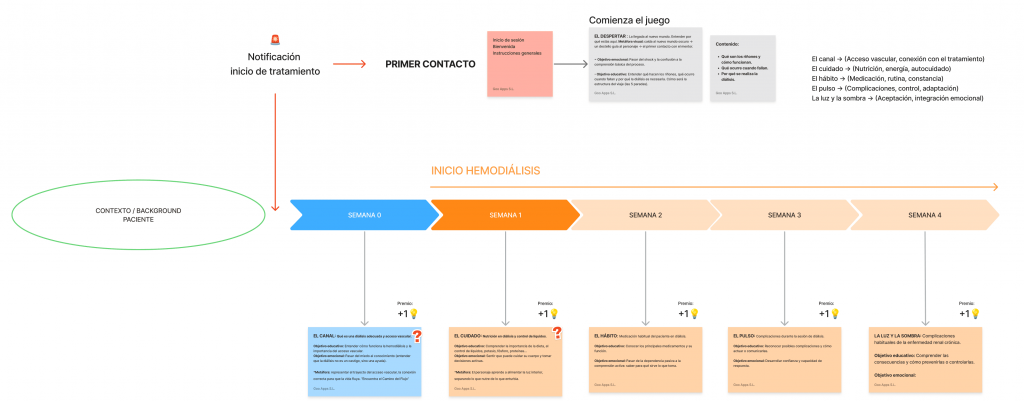
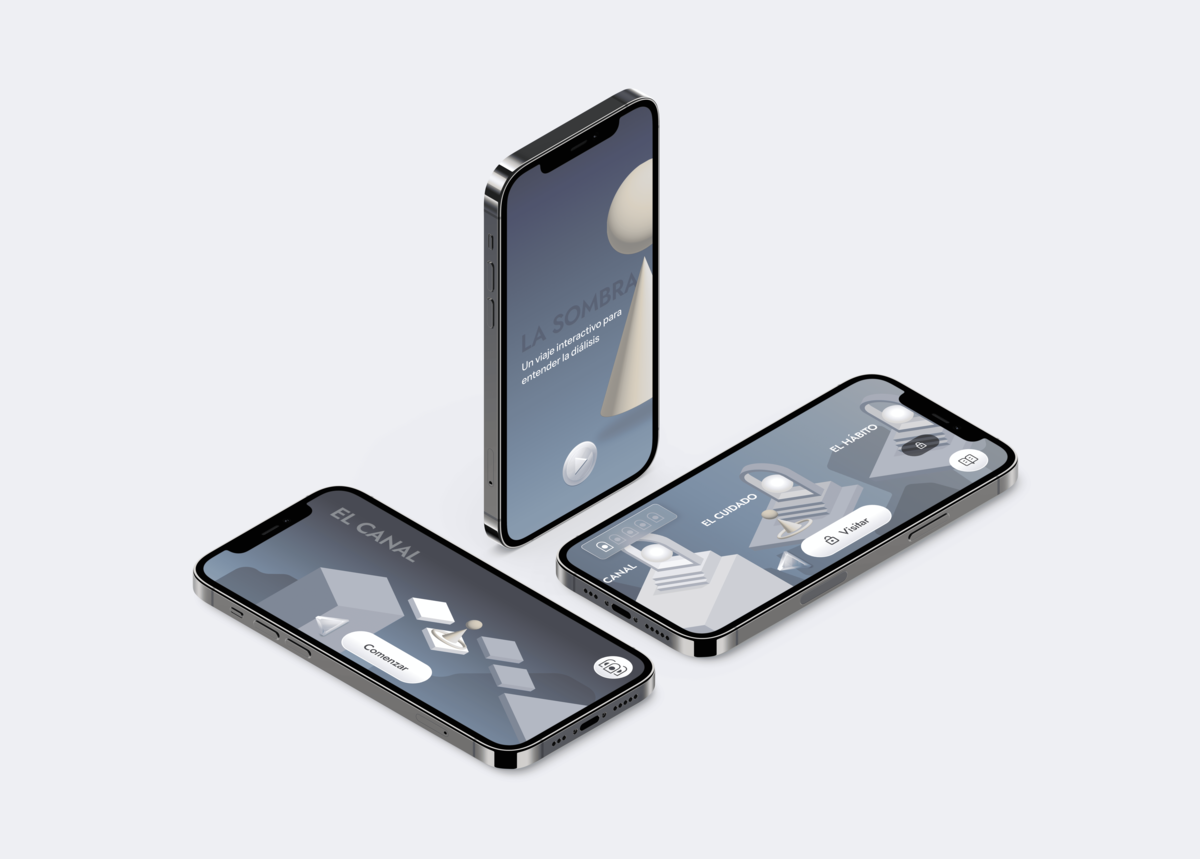
The solution we developed at GooApps was a serious game designed to support the beginning of the dialysis process through a progressive, interactive and contextualised experience.
The core idea was to avoid an approach based on delivering all the information at once. Instead, we designed an experience that would guide the person step by step, integrating learning into the interaction itself and adapting the content to the specific moment in the journey.
The proposal was built on several design principles:
This approach responded to an idea we consider key at GooApps in digital health: a useful solution does not only deliver content, it helps the person orient themselves within their own experience.
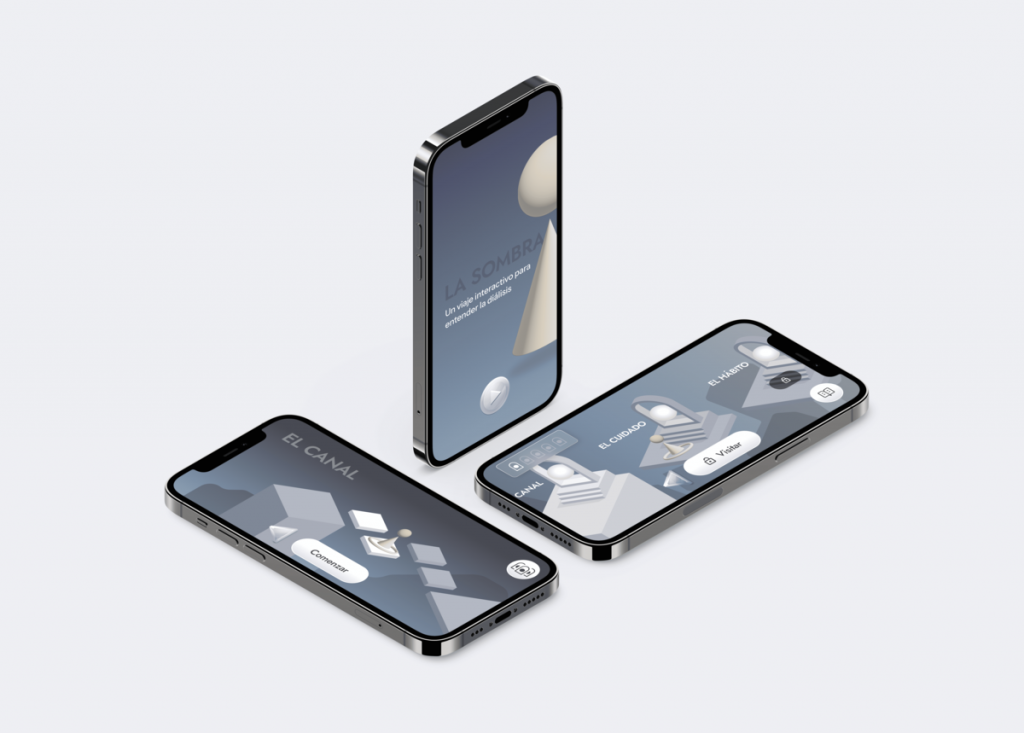
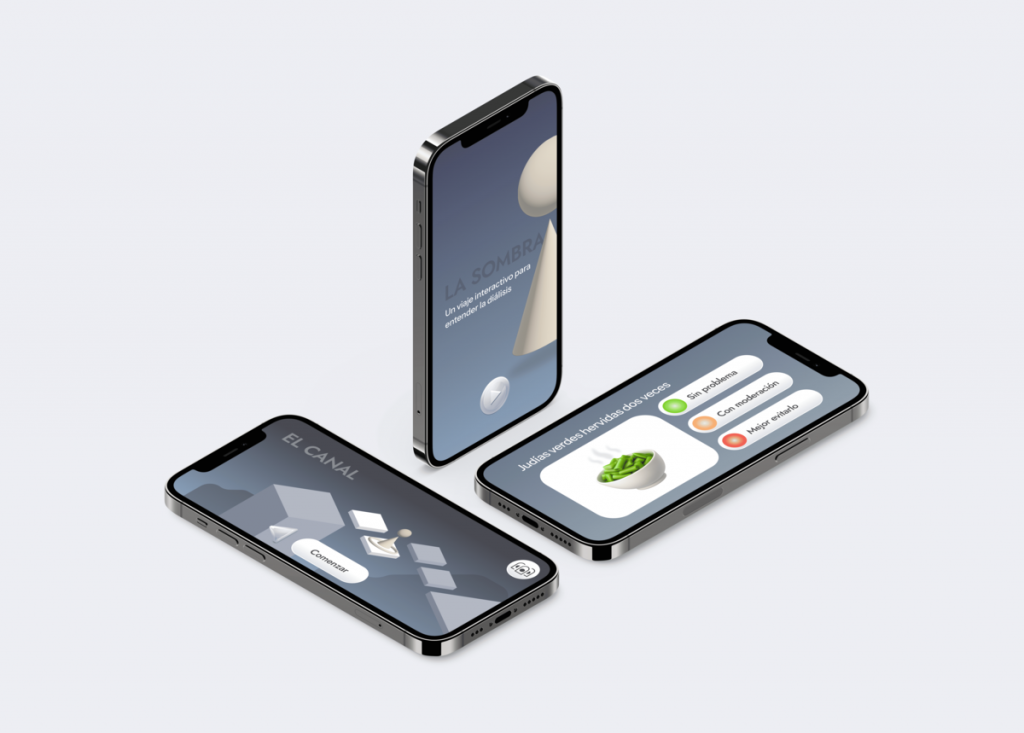
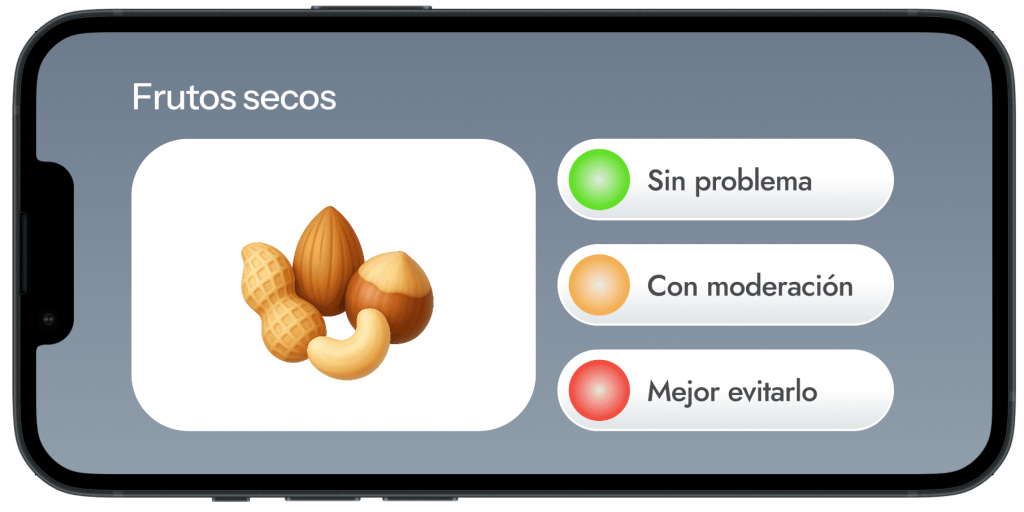
In this project, gamifying did not mean trivialising a clinical process. Quite the opposite. It meant using interactive elements to make a complex situation easier to understand, reinforce learning and reduce cognitive load at a particularly sensitive time.
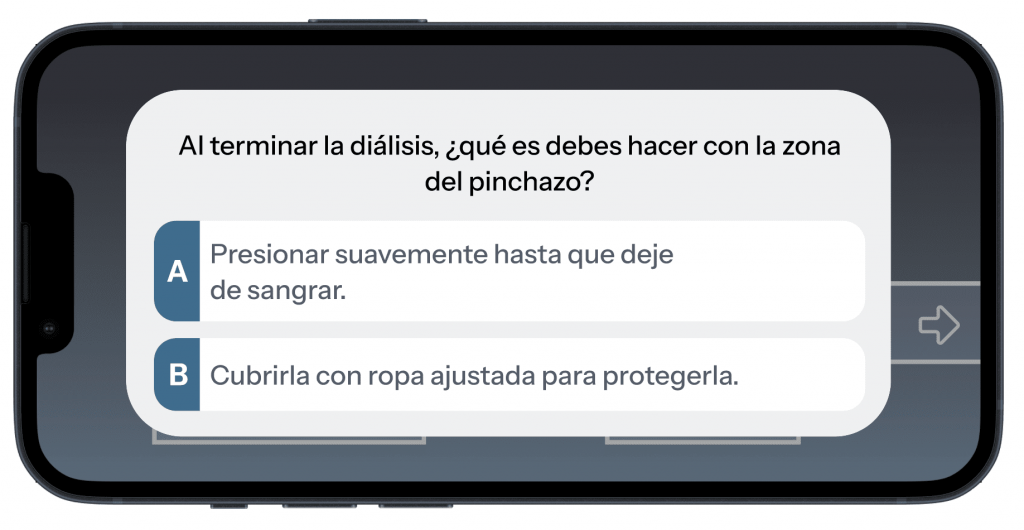
Each stage of the journey included small elements or mini-games designed to:
The key was the purpose. It was not about “playing”, but about facilitating understanding and support. In other words, it was about transforming potentially overwhelming clinical information into a more accessible and manageable experience.
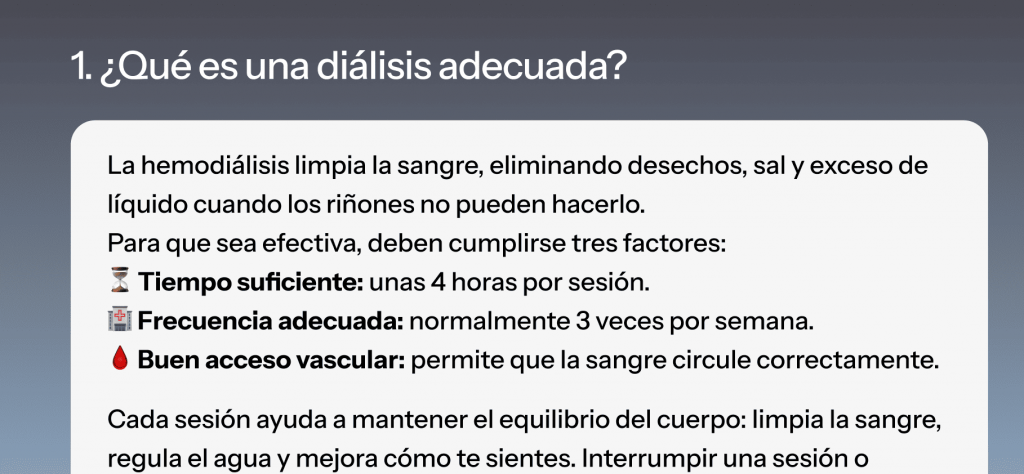
One of the most valuable aspects of the experience was being able to work on the proposal in an iterative and multidisciplinary way. The solution did not emerge as a fixed idea from the start. It matured through different mentoring sessions and feedback throughout the programme.
Among the areas that helped evolve the proposal the most were:
This process fits very well with the way we work at GooApps: we understand that healthcare projects require not only technical capability, but also listening, validation, context and people-centred design.
Our contribution to this project was not only technological. GooApps took part from a broader perspective, connecting experience design, product logic and a practical approach to healthcare innovation.
More specifically, the work focused on:
This matters because, in healthcare, a good idea is not enough. It has to become an experience that makes sense both for the user and for the healthcare environment in which it is applied.
CSAPG’s participation was key to keeping the project connected to a specific care need. Their role made it possible to work on a grounded challenge, linked to a real healthcare context and to a particularly relevant stage in the patient experience.
In this type of project, having an involved healthcare organisation makes all the difference. It helps avoid abstract solutions and better orient the proposal towards real usefulness, both from a clinical perspective and from the person’s experience.
That is exactly what the collaboration with CSAPG brought: realism, focus and a clear care-oriented purpose.
This experience reinforced several convictions that are already part of how we understand GooApps:
It also gave us an important methodological lesson: when technology, design, narrative and clinical context work in alignment, more useful solutions with greater potential for real impact emerge.
Beyond the programme itself, this project shows something important about how we work at GooApps: we care about technology when it genuinely improves people’s experience.
This success story clearly reflects several capabilities we apply in digital health projects:
In a context where healthcare innovation is often discussed in very abstract terms, this kind of project matters to us precisely because it forces us to ground the conversation: what problem are we solving, who are we helping, and how are we doing it responsibly?
In addition, these kinds of projects are not only understood through the development of a prototype, but also through their ability to evolve and scale in real environments. In this sense, through GooVentures, our venture studio focused on driving new digital products, we work to identify the growth potential of solutions like this one, exploring how they can be extended to other healthcare contexts, adapted to different patient profiles or integrated into broader care models. This approach allows us to go beyond the initial concept and support the product’s evolution towards real-world impact.
Our experience in Serious Games Lab confirms that there is a promising line of work at the intersection of digital health, gamification, patient onboarding and people-centred design.
At GooApps, we see a clear opportunity to keep exploring this kind of solution in areas where understanding, guidance and support play a real role in the user experience.
Because in healthcare, it is not enough for a solution to be functional. It also needs to be clear, usable, respectful and human.
And that is where well-designed technology can make a real difference.
The challenge focused on improving the onboarding of patients starting dialysis treatment, helping make the process more understandable, progressive and less overwhelming.
GooApps worked on a serious game proposal designed to support users during the early stages of the dialysis process, integrating information, context and interaction into a guided experience.
Because it can help translate complex processes into clearer and more manageable experiences, as long as it is used with care and with a focus on understanding, support and real value for the person.
CSAPG provided the real healthcare context for the challenge, allowing the proposal to be developed around a specific care need rather than a generic hypothesis.
It demonstrates GooApps’ ability to address digital health challenges from a people-centred perspective, connecting design, technology and clinical context to build meaningful solutions.
Complete the form and GooApps® will help you find the best solution for your organization. We will contact you very soon!


 +34 656 828 020
 Schedule an online meeting